
 Kontakt
 Ako nakupovať
Doručenie
Nákupný poradca
 Angličtina
 99 b
99 b
Až 30 dní na vrátenie tovaru
Zákazníci tiež kúpili









 /
/
 Kniha
Kniha
 21.51
€
21.51
€




 /
Brožovaná
52.79
€
/
Brožovaná
52.79
€


 /
Brožovaná
13.37
€
/
Brožovaná
13.37
€


 /
Brožovaná
68.08
€
/
Brožovaná
68.08
€

 /
Kniha
75.45
€
/
Kniha
75.45
€





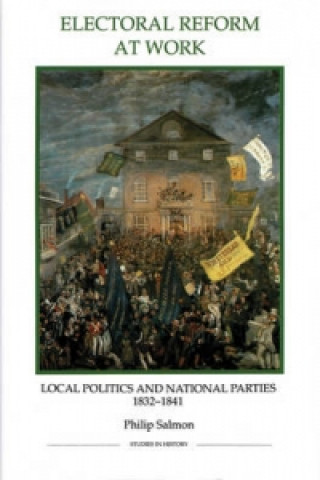
This book charts the political transformation of Britain that resulted from the "Great" Reform Act of 1832. It argues that this extensively debated parliamentary reform, aided by the workings of the New Poor Law (1834) and Municipal Corporations Act (1835), moved the nation far closer to a "modern" type of representative system than has previously been supposed. Drawing on hitherto neglected local archives and the records of election solicitors, Dr Salmon demonstrates how the Reform Act's practical details, far from being mere "small print", had a profound impact on borough and county politics. Combining computer-assisted electoral analysis with traditional methods, he traces the emergence of new types of voter partisanship and party organisation after 1832, and exposes key differences between the parties which resulted in a remarkable national recovery by the Conservative party. In passing he provides important new perspectives on issues such as MPs' relations with their constituents, the expense and culture of popular politics after 1832, the electoral impact of railway development, and the role of "deference voting" in the counties. Dr PHILIP SALMON is Editor of the 1832-1945 House of Commons project at the History of Parliament


Informácie o knihe
Angličtina
Kategórie

Darujte túto knihu ešte dnes
Je to jednoduché
1 Pridajte knihu do košíka a vyberte možnosť doručiť ako darček 2 Obratom Vám zašleme poukaz 3 Knihu zašleme na adresu obdarovanéhoMohlo by vás tiež zaujímať




 /
Pevná
23.83
€
/
Pevná
23.83
€


 /
Brožovaná
14.77
€
/
Brožovaná
14.77
€
 /
Brožovaná
13.98
€
/
Brožovaná
13.98
€

 /
Pevná
26.34
€
/
Pevná
26.34
€


 /
Brožovaná
21.02
€
/
Brožovaná
21.02
€



Ahoj! Som Libroamiko, tvoj knižný radca.
Ako ti môžem pomôcť?