
 Kontakt
 Ako nakupovať

Doručenie
Nákupný poradca
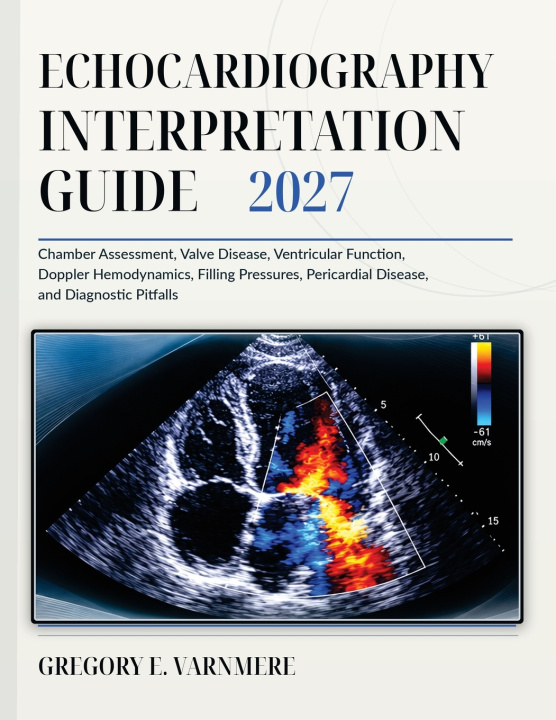
Echocardiography Interpretation Guide 2027
Chamber Assessment, Valve Disease, Ventricular Function, Doppler Hemodynamics, Filling Pressures, Pericardial Disease, and Diagnostic Pitfalls
 Angličtina
 432 b
 Pripravujeme
 Nové
Až 30 dní na vrátenie tovaru

An echocardiographic measurement is not the same thing as a diagnosis.
A reduced ejection fraction, a borderline valve gradient, an enlarged cardiac chamber, or an unexpected Doppler pattern can appear straightforward on the screen. Yet the meaning of each finding depends on how it was measured, the surrounding cardiac physiology, and whether other observations support the same conclusion.
The difference between recognizing an abnormality and interpreting it correctly is often where the most important clinical reasoning takes place.
ECHOCARDIOGRAPHY INTERPRETATION GUIDE 2027 examines the principles behind meaningful cardiac ultrasound interpretation, helping readers understand the relationship between measurements, cardiovascular function, and diagnostic conclusions.
The guide focuses on seven important areas of echocardiographic assessment:
Cardiac chamber assessment: Examine the evaluation of chamber size, geometry, and structural abnormalities, including findings that require additional consideration before being labeled abnormal.
Ventricular function: Explore the assessment of left and right ventricular performance, the interpretation of functional measurements, and the limitations of individual parameters.
Valvular heart disease: Understand the findings associated with stenosis and regurgitation, including how different observations contribute to determining the significance of a valve abnormality.
Doppler hemodynamics: Consider velocity measurements, pressure gradients, flow characteristics, and the physiological assumptions that influence their interpretation.
Filling pressures and diastolic assessment: Examine the relationship between Doppler findings, ventricular relaxation, filling characteristics, and estimates of cardiac filling pressure.
Pericardial disease: Explore echocardiographic findings associated with pericardial abnormalities and their potential hemodynamic implications.
Diagnostic pitfalls: Recognize why technical limitations, measurement variability, misleading images, and conflicting findings can lead to inappropriate conclusions.
One measurement rarely tells the whole story.
The ability to interpret echocardiography requires attention to the quality of the examination, consistency between findings, and the clinical question that prompted the investigation.
Developed for cardiac sonographers, cardiology trainees, physicians, and healthcare professionals studying cardiovascular imaging, this reference emphasizes thoughtful analysis rather than treating individual numbers as definitive answers.
Make the next interpretation more meaningful: question the measurement, examine the supporting evidence, and understand what the cardiac findings genuinely allow you to conclude.


Informácie o knihe
Angličtina

Darujte túto knihu ešte dnes
Je to jednoduché
1 Pridajte knihu do košíka a vyberte možnosť doručiť ako darček 2 Obratom Vám zašleme poukaz 3 Knihu zašleme na adresu obdarovanéhoAhoj! Som Libroamiko, tvoj knižný radca.
Ako ti môžem pomôcť?