
 Kontakt
 Ako nakupovať
Doručenie
Nákupný poradca
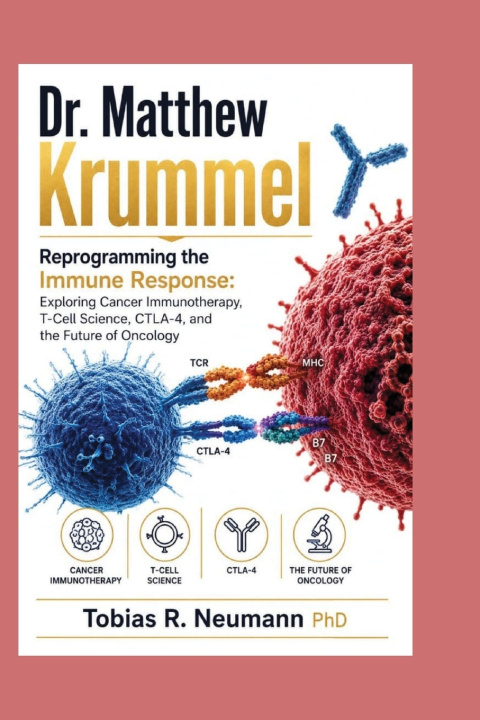
Dr. Matthew Krummel
Reprogramming the Immune Response: Exploring Cancer Immunotherapy, T-Cell Science, CTLA-4, and the Future of Oncology
 Angličtina
 48 b
48 b
 Pripravujeme
 Nové
Nové
Až 30 dní na vrátenie tovaru

Cancer is more than a disease of uncontrolled cell growth. It is also a battle between malignant cells and the body's immune system-a battle that modern science is learning to understand in unprecedented detail.In Dr. Matthew Krummel: Reprogramming the Immune Response, readers are introduced to the science behind one of the most transformative areas of modern oncology: cancer immunotherapy. The book explores how the immune system recognizes abnormal cells, how tumors evade immune surveillance, and how T cells can be activated, regulated, engineered, and redirected toward cancer.
From the foundations of cancer immunology to the discovery and significance of immune checkpoints such as CTLA-4, this book explains the biological principles behind checkpoint blockade and the changing role of T-cell science in cancer treatment. It also examines why some tumors resist therapy, how biomarkers can help predict treatment response, and why combining different treatment approaches may be necessary to overcome the complex defenses of cancer.
Readers will discover how modern research is moving beyond a one-size-fits-all approach. Personalized immunotherapy, engineered immune cells, cancer vaccines, advanced biomarkers, tumor profiling, and emerging technologies are creating new possibilities for tailoring treatment to the biology of individual cancers.
The book also takes a broader view of long-term cancer care. Immunotherapy is not presented as the answer to every cancer or every patient. Instead, the discussion considers how surgery, radiation, chemotherapy, targeted treatments, immunotherapy, surveillance, and combination strategies can each have important roles depending on the disease and its biological characteristics.
Inside, readers will explore:
• How the immune system identifies abnormal cells and how cancer attempts to escape detection
• The science of T-cell activation, immune surveillance, CTLA-4, and checkpoint blockade
• Why some tumors respond to immunotherapy while others develop resistance
• How researchers are engineering stronger and more precise immune responses
• The growing importance of biomarkers and personalized cancer treatment
• How immunotherapy can be combined with other approaches to improve cancer control
• Emerging frontiers including engineered T cells, cancer vaccines, cellular therapies, and advanced immune research
• Why the future of oncology may depend on adaptive, individualized, and long-term treatment strategies
Written in accessible language while remaining grounded in modern cancer biology, this book provides a clear exploration of the scientific ideas driving the next generation of oncology.
Whether you are interested in cancer research, immunology, T-cell biology, medical innovation, or the future of cancer treatment, this book offers a thoughtful journey through the science of using the immune system as one of medicine's most promising tools against cancer.
The future of cancer care may not depend on one universal treatment. It may depend on understanding each tumor more precisely, identifying its weaknesses, and learning how to guide the immune system toward the right target at the right time.


Informácie o knihe
Angličtina

Darujte túto knihu ešte dnes
Je to jednoduché
1 Pridajte knihu do košíka a vyberte možnosť doručiť ako darček 2 Obratom Vám zašleme poukaz 3 Knihu zašleme na adresu obdarovanéhoAhoj! Som Libroamiko, tvoj knižný radca.
Ako ti môžem pomôcť?