
 Kontakt
 Ako nakupovať
Doručenie
Nákupný poradca
 Angličtina
 63 b
63 b
 Pripravujeme
 Nové
Nové
Až 30 dní na vrátenie tovaru

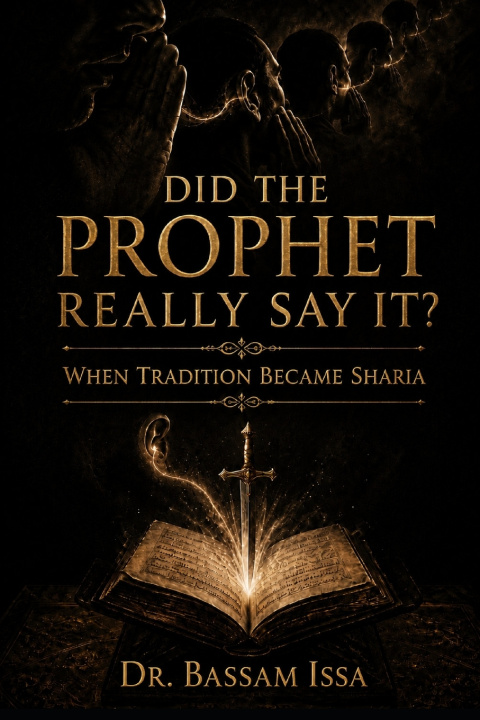
DID THE PROPHET REALLY SAY IT?
When Tradition Became Sharia
A sentence is spoken.
A man hears it.
Another man remembers it.
Another repeats it.
Generations pass.
Then, centuries later, the sentence returns wearing a different robe:
The Messenger of God said...
But did he?
This book puts that question on trial.
Structured as twenty-one courtroom hearings, Did the Prophet Really Say It? examines reports attributed to Muhammad not by beginning with the assumption that they are false, but by asking a more difficult question:
How much certainty can the evidence actually bear?
The court opens files on reports concerning women, sex, punishment, apostasy, stoning, slavery, medicine, disease, the unseen, angels, devils, animals, embryology, memory, and human error. Then it turns from the content of the reports to the machinery that carried them across the centuries: chains of transmission, narrator reliability, transmission by meaning, conflicting wordings, forgotten reports, hidden defects, and the judgments of later critics.
The prosecution does not need every narrator to be a liar.
That would be the easy case.
The harder possibility is that they were human.
Honest men forget.
Trustworthy men disagree.
A narrator may preserve the meaning and lose the wording.
A critic may prefer one version over another.
A report may be classified as authentic without becoming a recording of the seventh century.
And when historical probability remains historical probability, another question becomes unavoidable:
What happens when probability becomes Sharia?
When a report concerns a minor ritual detail, uncertainty may remain a scholarly problem.
But when the same mechanism is used to justify killing, stoning, corporal punishment, sexual access to captives, slavery, or permanent judgments about half of humanity, uncertainty acquires a victim.
This book does not ask the reader to conclude that Muhammad said none of these things.
It asks for something both simpler and more demanding:
Do not claim that he said them with more certainty than the evidence allows.
The final judgment is not the court's alone.
It belongs to the reader.


Informácie o knihe
Angličtina

Darujte túto knihu ešte dnes
Je to jednoduché
1 Pridajte knihu do košíka a vyberte možnosť doručiť ako darček 2 Obratom Vám zašleme poukaz 3 Knihu zašleme na adresu obdarovanéhoAhoj! Som Libroamiko, tvoj knižný radca.
Ako ti môžem pomôcť?