
 Kontakt
 Ako nakupovať
Doručenie
Nákupný poradca
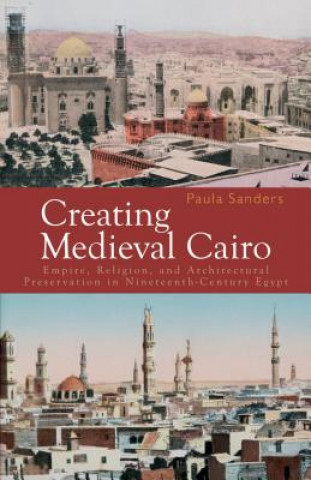
Creating Medieval Cairo
Empire, Religion, and Architectural Preservation in Nineteenth-century Egypt
 Angličtina
 80 b
80 b
Až 30 dní na vrátenie tovaru
Zákazníci tiež kúpili


 /
/
 Brožovaná
 31.90
€
31.90
€





This book looks at the politics and culture that shaped the preservation of historic Cairo. It argues that the historic city we know as Medieval Cairo was created in the nineteenth century by both Egyptians and Europeans against a background of four overlapping political and cultural contexts: namely, the local Egyptian, Anglo-Egyptian, Anglo-Indian, and Ottoman imperial milieux. Addressing the interrelated topics of empire, local history, religion, and transnational heritage, historian Paula Sanders shows how Cairo's architectural heritage became canonized in the nineteenth and twentieth centuries. The book also explains why and how the city assumed its characteristically Mamluk appearance and situates the activities of the European-dominated architectural preservation committee (known as the Comite) within the history of religious life in nineteenth-century Cairo. Sanders explores such varied topics as the British experience in India, the Egyptian debate over religious reform, and the influence of "The Thousand and One Nights" on European notions of the medieval Arab city. Offering fresh perspectives and keen historical analysis, this volume examines the unacknowledged colonial legacy that continues to inform the practice of and debates over preservation in Cairo.


Informácie o knihe
Angličtina

Darujte túto knihu ešte dnes
Je to jednoduché
1 Pridajte knihu do košíka a vyberte možnosť doručiť ako darček 2 Obratom Vám zašleme poukaz 3 Knihu zašleme na adresu obdarovanéhoMohlo by vás tiež zaujímať











 /
Brožovaná
49.32
€
/
Brožovaná
49.32
€

Ahoj! Som Libroamiko, tvoj knižný radca.
Ako ti môžem pomôcť?