
 Kontakt
 Ako nakupovať
Doručenie
Nákupný poradca
 Angličtina
 41 b
41 b
 Nové
Nové
30 dní na vrátenie tovaru

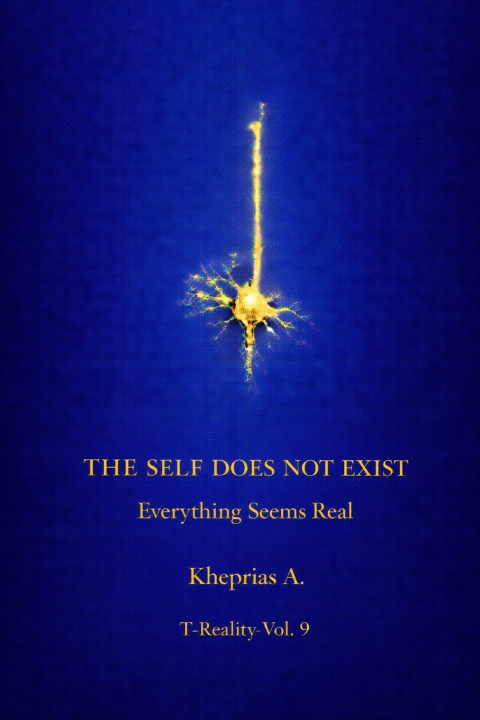
Cognitive Transparency
Why the Self Appears Real
T-Reality Series - Volume 9
Cognitive Transparency: Why the Self Appears Real is a work of philosophy of mind situated within contemporary cognitive science and predictive models of cognition. Its guiding question is not whether the self exists as a metaphysical entity, but why it is experienced as real, unified, and immediately given, even in light of scientific accounts that treat the self as a functional construct.
The book develops the concept of cognitive transparency to explain this phenomenon. A cognitively transparent structure is one that is operationally indispensable yet structurally inaccessible: it functions as a reference frame for perception, action, and inference without appearing as a representational object. The self, on this view, is not an inner substance but a functional constraint embedded within a predictive cognitive architecture.
Engaging with hierarchical predictive processing, Bayesian inference, and functionalist approaches, the volume shows how agency, ownership, and temporal continuity emerge from the stability of generative models rather than from an ontologically grounded subject. The work draws extensively on the contributions of Thomas Metzinger, Daniel C. Dennett, Andy Clark, Jakob Hohwy, Karl Friston, and Shaun Gallagher, integrating their insights into a coherent explanatory framework.
A central contribution of the book is its careful distinction between explanatory levels. Explaining how the self appears real does not entail denying the phenomenological reality of experience, nor does it justify strong ontological conclusions. Instead, the book argues for a disciplined naturalism that respects both the power and the limits of scientific explanation.
Cognitive Transparency concludes with an epistemological clarification of what scientific models of the self can and cannot explain. It shows that while cognitive science can account for why the self is experienced as fundamental, it does not-and need not-settle metaphysical questions about ultimate reality.
This book is intended for advanced readers in philosophy of mind, cognitive science, neuroscience, and related fields. It presupposes familiarity with contemporary theoretical debates and is designed as a rigorous contribution to the scientific understanding of selfhood.


Informácie o knihe
Angličtina

Darujte túto knihu ešte dnes
Je to jednoduché
1 Pridajte knihu do košíka a vyberte možnosť doručiť ako darček 2 Obratom Vám zašleme poukaz 3 Knihu zašleme na adresu obdarovanéhoAhoj! Som Libroamiko, tvoj knižný radca.
Ako ti môžem pomôcť?