
 Kontakt
 Ako nakupovať
Doručenie
Nákupný poradca
 Angličtina
 121 b
121 b
30 dní na vrátenie tovaru

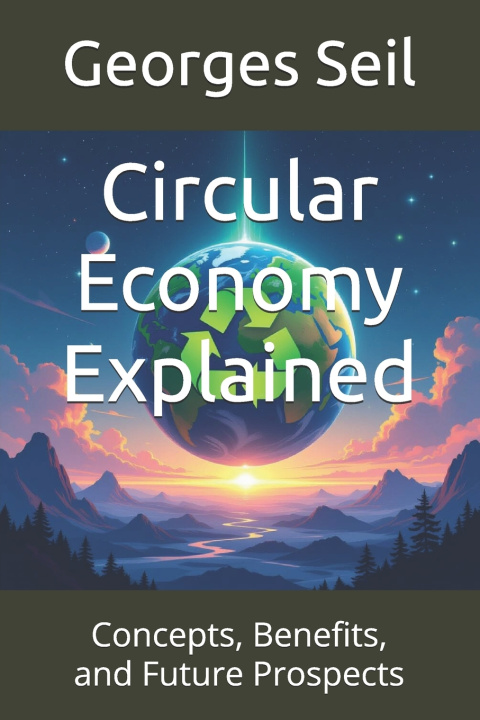
This book offers a deep dive into the multifaceted nature of the circular economy, providing rich content and engaging information in the context of Circular Economy.
Combining theory with real-world examples, case studies, and future outlooks make this book a valuable resource for readers interested in sustainability and economic innovation.
The style of the book is written more as an encyclopedia than as a story, in such a way that interested readers can use it as a reference work and supplement it if necessary by contacting the author and proposing amendments.
In the face of mounting environmental challenges and resource scarcity, the concept of the Circular Economy (CE) has emerged as a transformative approach to sustainability and economic development. Unlike the traditional linear economy, which follows a 'take-make-dispose' model, the circular economy aims to maximize resource efficiency, minimize waste, and create value by designing products and systems that enable materials to be reused, repaired, and recycled. At its core, the circular economy seeks to decouple economic growth from resource consumption, fostering a regenerative and restorative approach to production and consumption.
The concept of the circular economy has deep historical roots, drawing inspiration from principles of nature and indigenous practices. Ancient civilizations, such as the Greeks and Romans, practiced forms of resource conservation and reuse, while indigenous cultures around the world have long understood the importance of living in harmony with the natural environment. However, it wasn't until the late 20th century that the modern concept of the circular economy began to take shape.
In the 1970s, ideas of sustainable development and environmental conservation gained prominence, driven by concerns over pollution, habitat destruction, and climate change. The publication of seminal works such as "The Limits to Growth" by the Club of Rome highlighted the finite nature of Earth's resources and the need for a more sustainable approach to economic growth. Concurrently, the emergence of industrial ecology and cradle-to-cradle design principles laid the groundwork for the circular economy by emphasizing the interconnectedness of natural and human systems.
As the world grapples with pressing environmental and social challenges, the circular economy offers a compelling vision for a more sustainable and prosperous future. By reimagining the way we produce, consume, and dispose of goods and materials, the circular economy presents a pathway to economic development that is regenerative, inclusive, and resilient. As we continue to explore and implement circular economy principles, we have the opportunity to transform our economies and societies for the better, ensuring a more sustainable and equitable world for generations to come.
The foundations of the circular economy are deeply rooted in historical contexts and influenced by various economic, environmental, and social movements. From its origins in pre-industrial resource management practices to its modern incarnation as a comprehensive sustainability strategy, the circular economy represents a significant departure from the traditional linear model. By embracing resource efficiency, product lifecycle extension, and closed-loop systems, the circular economy offers a pathway to a more sustainable, resilient, and prosperous future. As global awareness and implementation efforts continue to grow, the circular economy has the potential to transform how we produce, consume, and interact with the natural world.
To fully grasp the foundations of the circular economy, it is essential to explore its origins, evolution, and the stark contrast it presents to the conventional linear economy.


Informácie o knihe
Angličtina
Kategórie

Darujte túto knihu ešte dnes
Je to jednoduché
1 Pridajte knihu do košíka a vyberte možnosť doručiť ako darček 2 Obratom Vám zašleme poukaz 3 Knihu zašleme na adresu obdarovanéhoAhoj! Som Libroamiko, tvoj knižný radca.
Ako ti môžem pomôcť?