
 Kontakt
 Ako nakupovať
Doručenie
Nákupný poradca
 Angličtina
 31 b
31 b
30 dní na vrátenie tovaru
Zákazníci tiež kúpili









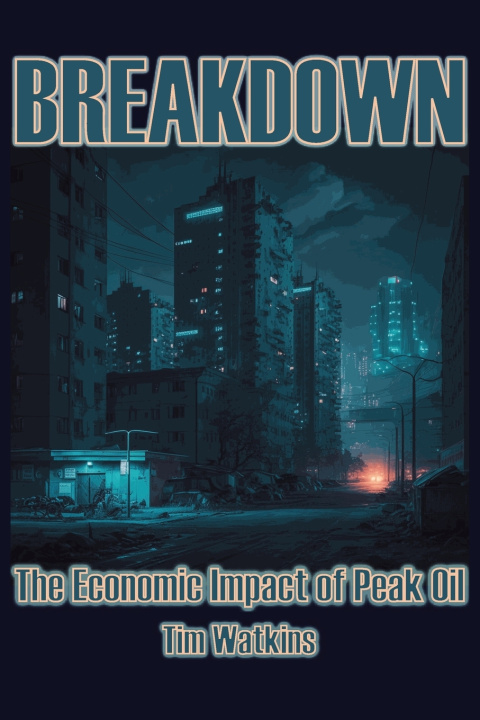
Suppose I told you there was a "pin" which burst every major economic bubble of the industrial age. And suppose that "pin" left a signal in data preceding the ensuing economic crash. Suppose that prior to 1929, 1973, 1980, and 2008, that "pin" appeared months and sometimes years before the crisis went mainstream.
In Breakdown: The economic impact of peak oil, Tim Watkins argues that the "pin" was a shortage of the world's primary energy source. In 1927, a global coal shortage caused prices to spike upward, raising costs across the economy and - particularly in the USA - bringing the boom of the "roaring twenties" to an end. The 1929 Wall Street crash and the Great Depression of the 1930s followed. In the late 1960s, as US oil production reached its peak, the Texas Railroad Commission cartel lost its ability to fix world prices. As the oil price rose, inflation hit those western states which had been deficit spending on everything from social programs to wars. The consequence was the end of the post-war currency system and the arrival of the OPEC cartel, whose October 1973 oil embargo gave the west - which was a lot less dependent on oil in those days - a taste of how difficult life would be if the oil stopped flowing. In 1979, it was the Iranian Revolution and the Iran-Iraq War (not St. Paul Volcker) which drove oil prices up, triggering the depression which brought inflation (but not stagnation) to an end.
This time is different
These crises were each temporary. By 1929, the USA was leading the way to the oil age. The developed world would follow between 1945 and 1973. And even with the arrival of OPEC, there was no appetite for depriving the world economy of oil. Indeed, despite the rate of oil production falling after 1973, the volume continued to grow right up to November 2018. But in 2005, conventional crude had peaked, setting in chain the events leading to the 2008 crash... which inadvertently created the conditions for the brief expansion of the US fracking industry. But by the end of 2018, all oil production - including condensates and natural gas liquids - was in decline. Even without the pandemic lockdowns, we would have had a recession. But with growing evidence that we have passed peak oil production, and with no energy-dense alternative power source, not only is a deep recession inevitable, but - barring an energy miracle - the western way of life is over. A shrinking economy is now inevitable.

Informácie o knihe
Angličtina

Darujte túto knihu ešte dnes
Je to jednoduché
1 Pridajte knihu do košíka a vyberte možnosť doručiť ako darček 2 Obratom Vám zašleme poukaz 3 Knihu zašleme na adresu obdarovanéhoMohlo by vás tiež zaujímať




Ahoj! Som Libroamiko, tvoj knižný radca.
Ako ti môžem pomôcť?