
 Kontakt
 Ako nakupovať
Doručenie
Nákupný poradca
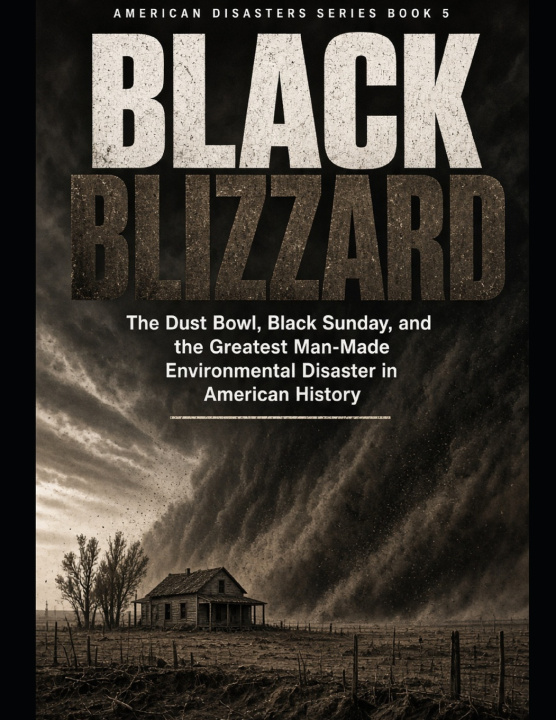
Black Blizzard
The Dust Bowl, Black Sunday, and the Greatest Man-Made Environmental Disaster in American History Series Name: American Disasters Series Number: Book 5
 Angličtina
 32 b
32 b
 Nové
Nové
Až 30 dní na vrátenie tovaru

The morning of April 14, 1935 was clear and beautiful across the Texas and Oklahoma panhandles. After weeks of dust storms, it was the kind of day that people had been desperately waiting for. They went to church. Women hung laundry. Children played outside. Men drove to visit neighbors.
By afternoon, a wall of black earth was moving toward them at forty miles per hour.
The Black Sunday dust storm was the worst single storm of the Dust Bowl era - the event that gave the decade its name and finally forced Congress to act. The wall of suspended topsoil stretching from the ground to heights of several thousand feet turned a clear Sunday afternoon into total, absolute darkness in minutes. It carried an electrical charge that killed car engines and shocked anyone who touched metal. People crawled home on their hands and knees. Some concluded they were witnessing the end of the world. They were not entirely wrong.
Black Blizzard tells the complete story of the Dust Bowl - from its causes to its consequences to its near-century of aftermath:
The Land Before - The native shortgrass prairie of the southern plains had root systems several feet deep that bound the topsoil together through multi-year droughts that were a normal feature of the Great Plains climate. That grassland was plowed under between 1910 and 1930 in the Great Plow-Up: millions of acres converted to wheat, driven by World War I-era prices and the false promise that "rain follows the plow."
The Making of a Disaster - In 1931, the rains stopped. Fourteen major dust storms in 1932. Thirty-eight in 1933. By 1934, 35 million acres of farmland were ruined and topsoil had blown from 100 million acres. An estimated 7,000 people died from dust pneumonia - breathing the soil of the southern plains.
Black Sunday - April 14, 1935. The beautiful morning. The wall. The darkness. The name that an AP reporter coined the next day from Guymon, Oklahoma: the Dust Bowl.
The Great Exodus - More than 2.5 million people fled the Great Plains during the 1930s. They were called Okies. They drove Route 66 to California. Dorothea Lange photographed them. John Steinbeck turned them into literature. Woody Guthrie sang about them.
The Reckoning - Hugh Hammond Bennett, the "father of soil conservation," was testifying before Congress about the need to act when Black Sunday's dust cloud rolled over Washington, D.C. "This, gentlemen, is what I have been talking about." Congress passed the Soil Conservation Act thirteen days after Black Sunday.
And then: whether it could happen again.
Black Blizzard is Book 5 of the American Disasters series.


Informácie o knihe
Angličtina

Darujte túto knihu ešte dnes
Je to jednoduché
1 Pridajte knihu do košíka a vyberte možnosť doručiť ako darček 2 Obratom Vám zašleme poukaz 3 Knihu zašleme na adresu obdarovanéhoAhoj! Som Libroamiko, tvoj knižný radca.
Ako ti môžem pomôcť?