
 Kontakt
 Ako nakupovať
Doručenie
Nákupný poradca
Beyond the Mother Tongue
 Angličtina
 253 b
253 b
Až 30 dní na vrátenie tovaru
Zákazníci tiež kúpili
































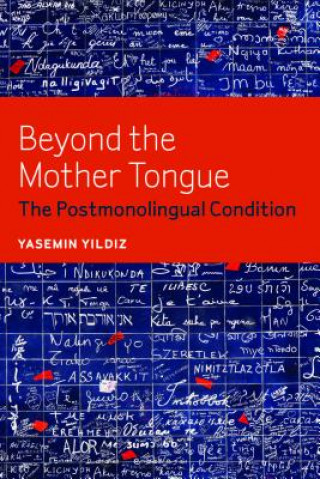
Monolingualism--the idea that having just one language is the norm--is only a recent invention, dating to late-eighteenth-century Europe. Yet it has become a dominant, if overlooked, structuring principle of modernity. According to this monolingual paradigm, individuals are imagined to be able to think and feel properly only in one language, while multiple languages are seen as a threat to the cohesion of individuals and communities, institutions and disciplines. As a result of this view, writing in anything but one's "mother tongue" has come to be seen as an aberration. Beyond the Mother Tongue demonstrates the impact of this monolingual paradigm on literature and culture and charts incipient moves beyond it. Because newer multilingual forms and practices exist in tension with the paradigm, which alternately obscures, pathologizes, or exoticizes them, this book argues that they can best be understood as "postmonolingual". Focused on canonical and minority writers working in German in the twentieth century, Beyond the Mother Tongue examines distinct forms of multilingualism, such as writing in one socially unsanctioned "mother tongue" about another language (Franz Kafka); mobilizing words of foreign derivation as part of a multilingual constellation within one language (Theodor W. Adorno); producing an oeuvre in two separate languages simultaneously (Yoko Tawada); and mixing different languages, codes, and registers within one text (Feridun Zaimoglu). Through these analyses, Beyond the Mother Tongue suggests that the dimensions of gender, kinship, and affect encoded in the "mother tongue" are crucial to the persistence of monolingualism and the challenge of multilingualism.


Informácie o knihe
Angličtina

Darujte túto knihu ešte dnes
Je to jednoduché
1 Pridajte knihu do košíka a vyberte možnosť doručiť ako darček 2 Obratom Vám zašleme poukaz 3 Knihu zašleme na adresu obdarovanéhoMohlo by vás tiež zaujímať



















Ahoj! Som Libroamiko, tvoj knižný radca.
Ako ti môžem pomôcť?