
 Kontakt
 Ako nakupovať
Doručenie
Nákupný poradca
 Angličtina
 267 b
267 b
Až 30 dní na vrátenie tovaru
Zákazníci tiež kúpili








 /
/
 Pevná
Pevná
 52.48
€
52.48
€







 /
Brožovaná
72.29
€
/
Brožovaná
72.29
€






 /
Brožovaná
19.60
€
/
Brožovaná
19.60
€








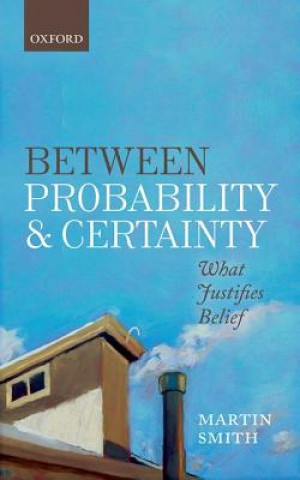
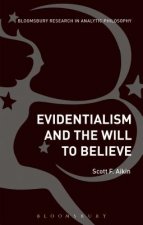
Martin Smith explores a question central to philosophy-namely, what does it take for a belief to be justified or rational? According to a widespread view, whether one has justification for believing a proposition is determined by how probable that proposition is, given one's evidence. In the present book this view is rejected and replaced with another: in order for one to have justification for believing a proposition, one's evidence must normically support it-roughly, one's evidence must make the falsity of that proposition abnormal in the sense of calling for special, independent explanation. This conception of justification bears upon a range of topics in epistemology and beyond, including the relation between justification and knowledge, the force of statistical evidence, the problem of scepticism, the lottery and preface paradoxes, the viability of multiple premise closure, the internalist/externalist debate, the psychology of human reasoning, and the relation between belief and degrees of belief. Ultimately, this way of looking at justification guides us to a new, unfamiliar picture of how we should respond to our evidence and manage our own fallibility. This picture is developed here.


Informácie o knihe
Angličtina

Darujte túto knihu ešte dnes
Je to jednoduché
1 Pridajte knihu do košíka a vyberte možnosť doručiť ako darček 2 Obratom Vám zašleme poukaz 3 Knihu zašleme na adresu obdarovanéhoMohlo by vás tiež zaujímať





 /
Brožovaná
5.62
€
/
Brožovaná
5.62
€




 /
Brožovaná
20.10
€
/
Brožovaná
20.10
€


 /
Brožovaná
28.15
€
/
Brožovaná
28.15
€


Ahoj! Som Libroamiko, tvoj knižný radca.
Ako ti môžem pomôcť?