
 Kontakt
 Ako nakupovať
Doručenie
Nákupný poradca
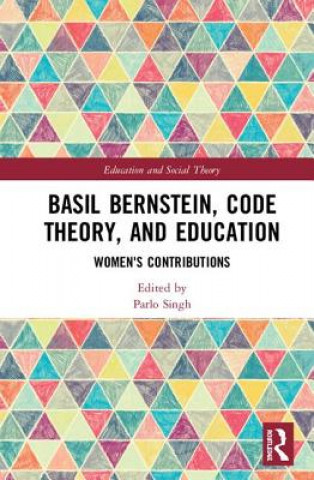
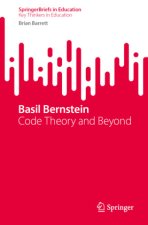
Basil Bernstein, Code Theory, and Education
 Angličtina
 580 b
580 b
Až 30 dní na vrátenie tovaru
Zákazníci tiež kúpili






 /
/
 Brožovaná
 19.32
€
19.32
€






 /
Brožovaná
26.90
€
/
Brožovaná
26.90
€


Over a career spanning forty years, Basil Bernstein produced theoretical models about the workings of educational systems, and how these systems produce social relations of inequality. He was considered by many to be a radical scholar whose work generated enormous controversies. One such controversy was around code theory, specifically restricted and elaborated codes which came to signifyfor some scholarsthe deficit views of those living in poverty. Bernstein weathered the intensity of the debates around these ideas, spending much of his career vehemently challenging deficit portrayals of code theory, reworking and extending his theoretical corpus with the development of ideas around pedagogic discourse and identity.
The past decade has witnessed a revival of interest in Bernsteins theoretical ideas across fields as diverse as policy studies, sociology of education, curriculum and pedagogy studies, anthropology, linguistics, and social and cultural psychology. This book contributes to the revival of Bernsteins work by examining specifically some womens contribution to this theoretical corpus. The contributions traverse a number of disciplines, building a rich tapestry of concepts to think about education systems and the formation of social minds. Significantly the book tackles the complex matter of how to empirically work with Bernsteins ideas, and so contribute to debates about the nexus between theory and methods. The chapters in this book were originally published as articles in Taylor & Francis journals or previously published in Taylor & Francis books.


Informácie o knihe
Angličtina

Darujte túto knihu ešte dnes
Je to jednoduché
1 Pridajte knihu do košíka a vyberte možnosť doručiť ako darček 2 Obratom Vám zašleme poukaz 3 Knihu zašleme na adresu obdarovanéhoMohlo by vás tiež zaujímať






 /
Brožovaná
21.64
€
/
Brožovaná
21.64
€



 /
Brožovaná
28.32
€
/
Brožovaná
28.32
€
 /
Brožovaná
10.11
€
/
Brožovaná
10.11
€








 /
Pevná
104.61
€
/
Pevná
104.61
€


Ahoj! Som Libroamiko, tvoj knižný radca.
Ako ti môžem pomôcť?