
 Kontakt
 Ako nakupovať
Doručenie
Nákupný poradca
 Angličtina
 24 b
24 b
Až 30 dní na vrátenie tovaru

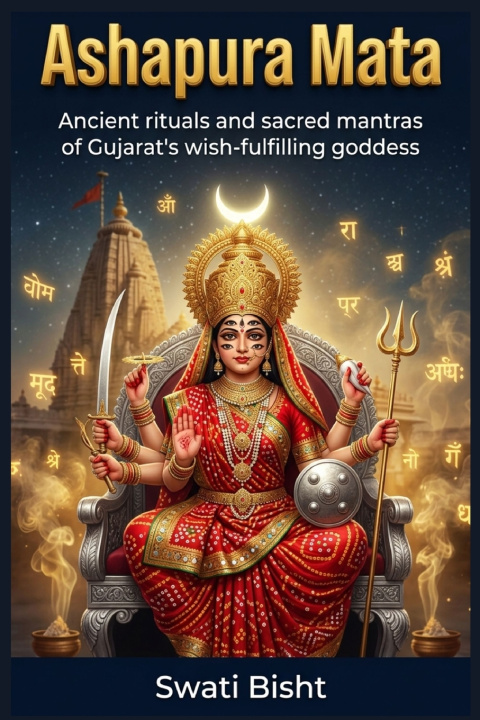
How does an ancient regional deity maintain such profound influence in a globalized era? This volume serves scholars of Indian theology and practitioners of the Shakta path who require a primary-source-driven guide to the specific liturgical requirements and historical manifestations of the Kutch region's most revered protective force, addressing the central question of how faith survives geographic displacement.
The arid expanse of western India holds a spiritual resonance centered on the shrine of Mata no Madh. Here, the goddess Ashapura is not merely a mythological figure but a living presence guiding the daily lives of millions. Her manifestation as a Swayambhu or self-appeared icon distinguishes her within the pantheon, marking a point where the physical landscape meets divine intervention. This text provides a meticulous examination of her history, beginning with the foundational legends of the Jadeja dynasty and moving through the architectural evolution of her sacred spaces. The narrative explores how the temple's physical layout mirrors the spiritual ascent of the pilgrim, incorporating detailed observations of the iconography that defines her unique form.
Beyond historical inquiry, the text addresses the mechanics of faith. It interprets the symbolic language of the goddess's iconography-her posture, her weapons, and her unique lack of a traditional pedestal. By placing these details within the broader context of Hindu iconography, the work clarifies how regional specifics enrich the universal feminine principle. The narrative maintains a focus on intellectual rigor, ensuring that every ritual described is rooted in established scriptural precedent or documented oral tradition, providing a stable foundation for both academic study and personal veneration. It further explores the socio-economic impact of the annual pilgrimage, illustrating how the deity acts as a unifying force for the diverse communities of the Gujarat plains.
Inside This Guide:
Examine the chronological development of the primary temple at Mata no Madh.
Articulate the phonetic structures of the Mool prayer for accurate recitation.
Coordinate the specific dietary and behavioral restrictions required for Navratri.
Identify the symbolic meaning behind traditional offerings like Patola silk.
Establish a domestic altar using historically accurate directional alignments.
Interpret the cultural impact of folk songs and Garba within regional worship.
Synthesize ancient vows with modern lifestyle constraints for consistent practice.
This edition is distinguished by its commitment to linguistic and historical accuracy. Rather than providing generic summaries, it isolates the unique characteristics of the Ashapura tradition that are frequently lost in broader theological surveys. The prose is designed for clarity, removing the ambiguity often found in translated texts. By referencing local elders and historical records, the work ensures that the reader receives a primary-source experience. It is a necessary acquisition for those valuing the preservation of regional heritage and the precise execution of ancient Indian liturgical traditions in a contemporary setting. This volume prioritizes the integrity of the Shakta path through carefully curated research.


Informácie o knihe
Angličtina
