
 Kontakt
 Ako nakupovať
Doručenie
Nákupný poradca
 Angličtina
 33 b
33 b
 Nové
Nové
30 dní na vrátenie tovaru

We are living through a rare inflection point in the history of technology. Artificial intelligence has evolved from a research curiosity into a practical force reshaping industries, roles, and entire organizations. Yet for most professionals, the experience of AI remains curiously passive - a smarter search engine, a writing assistant, a dashboard that reads data and prints summaries. What is emerging now is categorically different, and it deserves a categorically different kind of explanation.
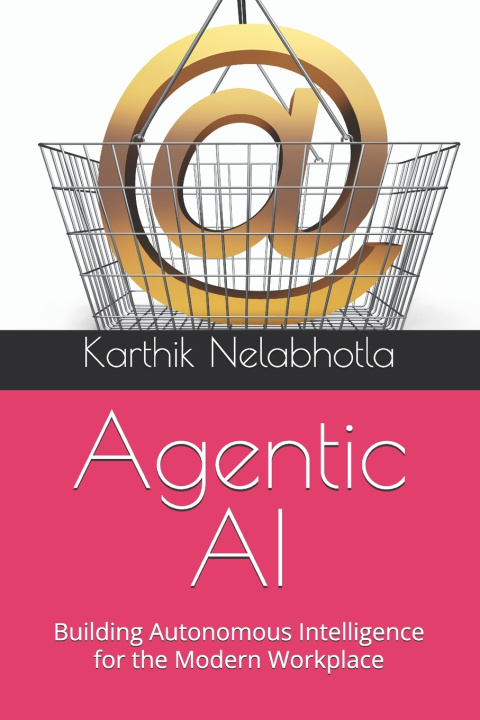
This book is about Agentic AI: systems capable of perceiving a goal, devising a plan, taking sequential actions, learning from feedback, and completing complex tasks with minimal human hand-holding. Agentic AI does not simply respond to a prompt; it acts in the world. It browses the web, writes and executes code, calls APIs, coordinates with other agents, manages long-horizon tasks, and does all of this in loops of autonomous decision-making. Understanding this technology - truly understanding it, not just collecting buzzwords about it - is quickly becoming one of the most valuable competencies a professional can develop.
I wrote this book for three audiences. First, for the business leader who senses that AI is more than a cost-reduction tool but is not sure how to think about it strategically. Second, for the practitioner - the engineer, the architect, the product manager - who wants to move from experimentation to production with agentic systems. Third, for the thoughtful individual contributor who wants to work effectively alongside AI agents and future-proof their career in the process.
The chapters are arranged to take you on a journey. We begin with the conceptual foundations - what agentic AI is, why it is different from what came before, and what makes it work. We then build toward implementation: how to design agents, choose the right architectures, connect them to real enterprise systems, and orchestrate them into multi-agent workflows. The latter chapters address the human dimensions: governance, ethics, change management, and the evolving relationship between human expertise and machine autonomy.
Every concept in this book is grounded in real patterns observed in organizations that are deploying agentic systems today. The examples are drawn from multiple industries - finance, healthcare, manufacturing, software development, customer operations, and more. The technical sections include concrete guidance without descending into code for its own sake. The strategic sections include frameworks you can use in board conversations, investment committees, and team design sessions.
A note on terminology: the field moves fast and definitions are contested. I use terms consistently within this book, but I flag where industry usage varies so that you can navigate the literature with confidence. I also try to be honest about what we do not yet know - about the limits of current systems, the open research questions, and the genuine ethical dilemmas that agentic AI introduces.
My deepest hope is that by the time you finish this book, you will feel equipped to be an active participant in the agentic AI transition - not a spectator. The decisions about how these systems are designed, governed, and deployed should be made by people who understand them. Let this book be your foundation.


Informácie o knihe
Angličtina

Darujte túto knihu ešte dnes
Je to jednoduché
1 Pridajte knihu do košíka a vyberte možnosť doručiť ako darček 2 Obratom Vám zašleme poukaz 3 Knihu zašleme na adresu obdarovanéhoAhoj! Som Libroamiko, tvoj knižný radca.
Ako ti môžem pomôcť?