
 Kontakt
 Ako nakupovať

Doručenie
Nákupný poradca
 Angličtina
 56 b
 Nové
Až 30 dní na vrátenie tovaru

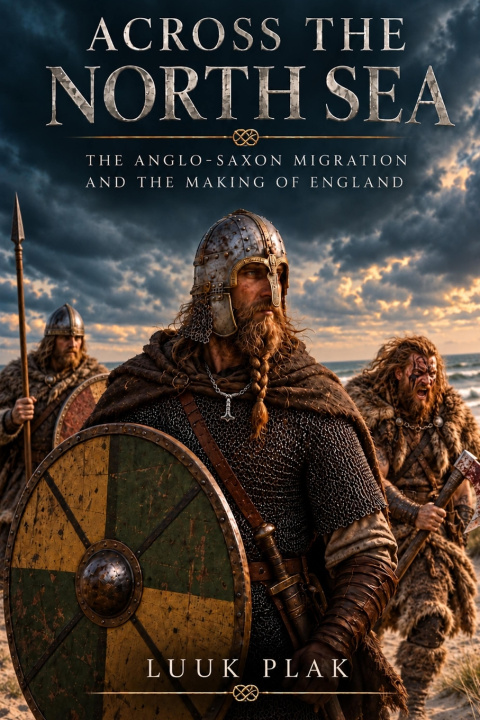
The making of England was a long and complex process shaped by migration, conflict, and cultural exchange. When Roman rule in Britain came to an end in the early fifth century, the island was still home to thriving communities of Britons. As Roman authority weakened, new opportunities emerged for people from across the North Sea.
Over the following centuries, Angles, Saxons, Jutes, and Frisians were among the peoples who crossed to Britain. Some came as warriors, while others arrived as settlers and families seeking new opportunities. Their movements took place over generations, not in a single invasion. Although later stories tell of figures such as Hengist and Horsa, the precise details of these early migrations remain uncertain.
The newcomers encountered Britain's existing population in different ways. Conflict and resistance occurred alongside coexistence, intermarriage, and assimilation. While some Britons moved westward or northward, many remained in areas that came under Anglo-Saxon rule. From these changing communities, new kingdoms gradually emerged, Christianity spread, and a distinct English culture and language developed.
Later, Viking raids and settlements reshaped the political landscape, contributing to the rise of stronger English kingship. Rulers such as Alfred the Great and Æthelstan helped lay the foundations of a more unified kingdom. In the eleventh century, Cnut's North Sea realm and the Norman Conquest of 1066 demonstrated that England remained closely connected to the wider world. The conquest transformed the ruling elite, but the English people and many of their traditions endured.
The legacy of these centuries survives in the English language, place-names, institutions, and landscapes. Yet England was never the creation of a single people or a single decisive event. It emerged through centuries of movement, adaptation, struggle, and exchange among Britons, Anglo-Saxon migrants, Scandinavians, and others.
The North Sea was not simply a barrier between lands. It was a bridge connecting people, cultures, and ideas. Across its waters, the foundations of England were gradually formed.


Informácie o knihe
Angličtina
Kategórie

Darujte túto knihu ešte dnes
Je to jednoduché
1 Pridajte knihu do košíka a vyberte možnosť doručiť ako darček 2 Obratom Vám zašleme poukaz 3 Knihu zašleme na adresu obdarovanéhoAhoj! Som Libroamiko, tvoj knižný radca.
Ako ti môžem pomôcť?