
 Kontakt
 Ako nakupovať
Doručenie
Nákupný poradca
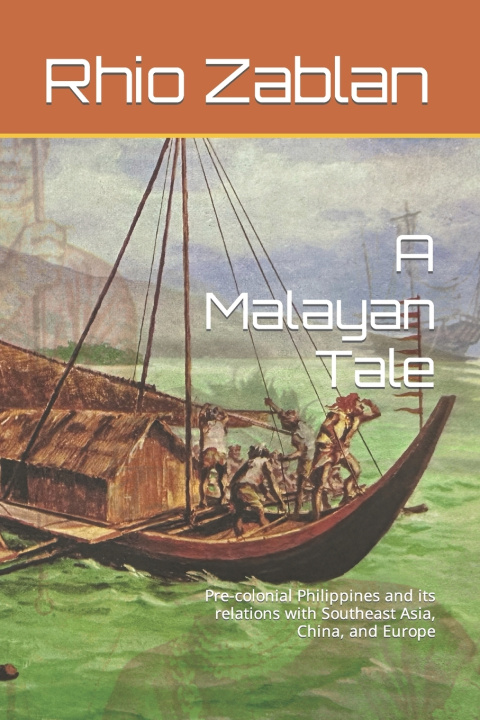
A Malayan Tale
Pre-colonial Philippines and its relations with Southeast Asia, China, and Europe
 Angličtina
 36 b
36 b
Až 30 dní na vrátenie tovaru

The beginning - Talks about the place where the author grew up; the life that the local people hadduring his younger years; how the "palang," a locally-made blade was used for earning a living; and what he learned in elementary school about the Malays, the author's ancestors
The Greatest Seafarers - Is a chapter that delves deep into the historical legacy of the Austronesians, renowned as the greatest seafarers of Neolithic times; their expansion as a pivotal population movement in the last 6,000 years; and the Malayness of Filipinos.
The Empire of Sri Vijaya and its Influence on the Malayan Race - As the title implies, this part discusses the undeniable influences of the Sri Vijaya empire on the inhabitants of the pre-colonial Philippines - influences that still reverberate to this very day.
Relations with ancient China and other trading partners - This is the book's highlight and paints a detailed picture of how the pre-colonial Filipinos connected with their neighbors in Southeast Asia and ancient China, the Song and Ming Dynasties in particular.
Princess of Sulu visits Paduka Batara's mausoleum - This short chapter is about the 606thanniversary of Paduka Batara's coming to Beijing, and the visit of Princess Jacel H. Kiram of Sulu to his mausoleum in Dezhou City, eastern China's Shandong Province.
Contact with Europeans - This part tells the story of how the first Europeans in Southeast Asia made contact with the "Lucoes" or the Kapampangan and Tagalog Nations of Luzon, their advanced culture, commerce, and skills in combat.
The honest profession of pre-colonial Filipinos - This part talks about the honest profession of pre-colonial Filipinos - a profession which we call today "piracy." Yes, your eyes read it right. Pre-colonial Filipinos were pirates!


Informácie o knihe
Angličtina
Kategórie

Darujte túto knihu ešte dnes
Je to jednoduché
1 Pridajte knihu do košíka a vyberte možnosť doručiť ako darček 2 Obratom Vám zašleme poukaz 3 Knihu zašleme na adresu obdarovanéhoAhoj! Som Libroamiko, tvoj knižný radca.
Ako ti môžem pomôcť?