
 Kontakt
 Ako nakupovať
Doručenie
Nákupný poradca
 Angličtina
 45 b
45 b
 Nové
Nové
Až 30 dní na vrátenie tovaru

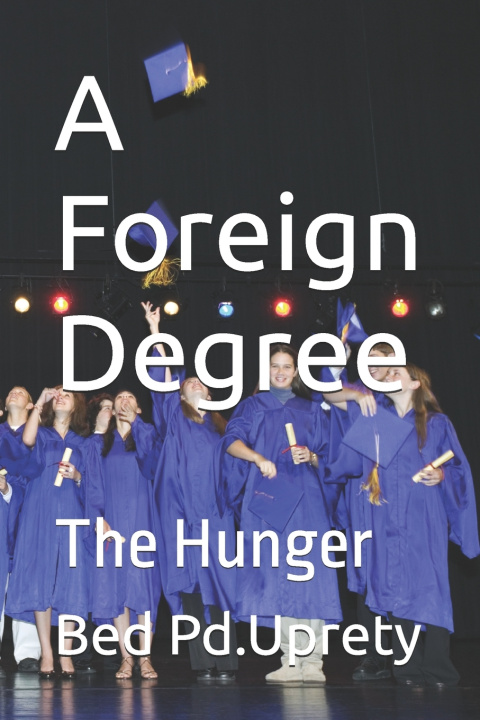
He borrowed two million rupees from everyone who loved him and flew to the Netherlands to become someone worth loving back.
Prakash Khadka is twenty-three, teaching English in Kathmandu for wages that barely cover his rent. He is hungry in every direction for Sarita, a colleague who offers everything except the thing that matters; for a future that keeps retreating; for escape from the elaborate codes that make desire feel like debt and intimacy feel like transgression. When he kisses his married landlady and nearly loses his home over it, he understands: something has to change.
He takes on a debt larger than his father will earn in a decade and boards a plane to Breda, the Netherlands, to study international tourism management. He arrives expecting the degree to open doors. The degree does something stranger: it opens him. European professors ask questions no Nepali classroom ever asked. They expect disagreement. They treat students as people with things worth saying. For months, he sits in rooms full of Western frameworks and wonders: Will any of this work when I go back? The answer doesn't arrive quickly. It arrives in fragments, over years.
He meets Emma, a Dutch student who says what she wants, asks what he wants, and treats desire as honest communication rather than a negotiation with conditions attached. With her, he learns what intimacy feels like without shame, without the months-long courtship dances that characterized every relationship he'd known in Nepal. Then she chooses Berkeley over him, ends it cleanly, and leaves him to understand that clarity is not always the same as kindness.
He returns to Nepal with a European degree and a mind that no longer fits comfortably anywhere. Interview panels ask about his uncle's connections, not his thesis. The tourism industry runs on permits and favors. He teaches English again, watches less qualified men advance through networks he will never have, and explains to his father slowly, painfully why the education cost everything and delivered almost nothing they had imagined.
Then something shifts. Not from the degree. From him. He begins mapping not roads and rivers, but possibilities. A sal forest trail that could become a guided walk. Tea gardens whose workers have spare rooms and no off-season income. A temple ruin being swallowed by roots, more valuable unrestored than rebuilt. He takes the frameworks from Dutch classrooms and translates them into Nepali, into the actual conditions of a village in Jhapa, into conversations under mango trees where farmers ask harder questions than any professor ever did. The knowledge from Europe was never meant to be applied directly. It was meant to be made local transformed by the person holding it.
This is not an immigrant success story. It is an honest account of what a foreign education actually does: not deliver a career, but change how you see. The frameworks may feel foreign. The curriculum may not resemble home. But the mind that learns to ask better questions that mind does not become irrelevant when it crosses back. It becomes a responsibility.
A Foreign Degree is for every student who has ever sat in a European or American classroom and wondered whether any of it would matter back home. Not as a success story. As a reckoning. As permission to take what you learned, leave what doesn't fit, and build something that belongs to the place you came from.
For readers of Americanah, Open City, The Namesake, and Exit West - a novel that traces neither triumph nor defeat, but the long work of becoming relevant: to your country, to your community, and to yourself.
BP Uprety writes from the inside with precision, warmth, and the honesty of someone who knows that what a foreign education gives you is not a career. It is a different mind. What you build with that mind is up to you.


Informácie o knihe
Angličtina

Darujte túto knihu ešte dnes
Je to jednoduché
1 Pridajte knihu do košíka a vyberte možnosť doručiť ako darček 2 Obratom Vám zašleme poukaz 3 Knihu zašleme na adresu obdarovanéhoAhoj! Som Libroamiko, tvoj knižný radca.
Ako ti môžem pomôcť?