
 Kontakt
 Ako nakupovať
Doručenie
Nákupný poradca
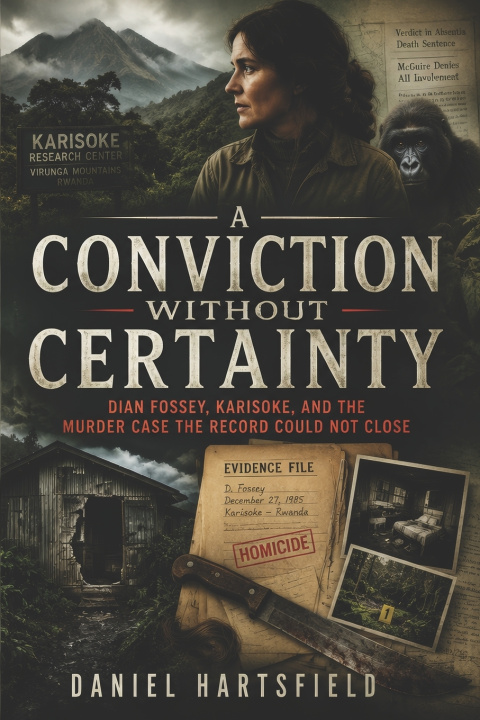
A CONVICTION WITHOUT CERTAINTY
Dian Fossey, Karisoke, and the Murder Case the Record Could Not Close
 Angličtina
 36 b
36 b
 Pripravujeme
 Nové
Nové
Až 30 dní na vrátenie tovaru

A murder, a conviction, and a record that never became certain.
On the morning of December 27, 1985, primatologist and conservationist Dian Fossey was found dead in her cabin at the Karisoke Research Center in Rwanda. The scene appeared to contain answers: a reported breach in the wall, a disturbed room, a machete-type weapon, reported hair evidence, and accounts that valuables had been left behind. Instead, each detail opened another question about access, motive, evidence handling, and the limits of the surviving record.
A Conviction Without Certainty reconstructs Fossey's life and final years before turning to the investigation and legal aftermath. It follows the world she built between Karisimbi and Bisoke, her work with mountain gorillas, the killing of Digit and the intensification of her anti-poaching mission, the conflicts surrounding conservation, and the pressures that formed around Karisoke. By beginning with Fossey as a scientist, founder, and conservationist rather than merely as a victim, the book restores the life that the murder case too often reduces to a crime scene.
The investigation eventually moved from early suspicion of poachers and local enemies toward an American researcher. A Rwandan tribunal convicted him in absentia and sentenced him to death. He denied involvement, and the legal outcome did not resolve enduring disputes over the alleged motive, the reported forensic evidence, the handling and preservation of records, or the fairness and completeness of the proceeding. Rather than turning those gaps into a new accusation, the narrative carefully separates confirmed facts, reported claims, allegations, inference, and uncertainty.
Following the reported trail of the weapon, hair evidence, missing or disputed papers, the brief trial in Ruhengeri, the reported death in custody of another accused figure, and the reported later loss of court archives, the book examines how a case can produce a verdict while still failing to preserve public confidence. It considers competing theories-anti-poaching retaliation, workplace conflict, political influence, tourism interests, and institutional pressure-without treating plausibility as proof or suspicion as a substitute for evidence.
The story also follows the case beyond the verdict. Later reporting, documentary retellings, renewed investigative interest, and questions about whether surviving evidence might still be located have repeatedly reshaped public understanding. Yet each retelling must confront the same problem: a famous homicide can accumulate versions faster than it accumulates reliable proof. Across four decades, that tension has not disappeared. The book keeps its attention on what the record can support, what remains disputed, and what may have been lost.
Written as evidence-aware narrative true crime, A Conviction Without Certainty combines atmosphere and investigative tension with legal and historical restraint. It does not invent private thoughts, sensationalize Fossey's death, or force a solution where the archive cannot support one. A detailed timeline, key people glossary, and source index help readers follow the chronology, distinguish legal status from allegation, and see where the record remains incomplete.
This is an account of a famous life, a violent death, and the moral cost of certainty built on fragments. It invites readers to look beyond the familiar legend and examine not only who was accused, but how evidence, institutions, memory, and missing records shaped a case the law answered more firmly than history could.
Source basis: the manuscript's front matter, author's note, narrative chapters, timeline, glossary, and source index.


Informácie o knihe
Angličtina

Darujte túto knihu ešte dnes
Je to jednoduché
1 Pridajte knihu do košíka a vyberte možnosť doručiť ako darček 2 Obratom Vám zašleme poukaz 3 Knihu zašleme na adresu obdarovanéhoAhoj! Som Libroamiko, tvoj knižný radca.
Ako ti môžem pomôcť?