
 Kontakt
 Ako nakupovať
Doručenie
Nákupný poradca
 Angličtina
 7 b
7 b

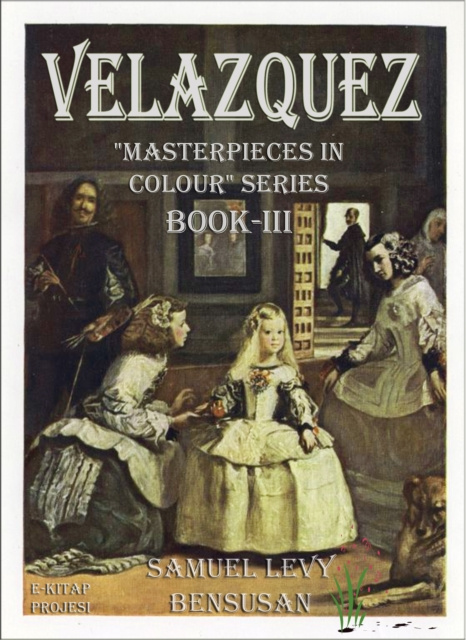
Diego Rodriguez de Silva y Velazquez (June 6, 1599 - August 6, 1660) was a Spanish painter who was the leading artist in the court of King Philip IV and one of the most important painters of the Spanish Golden Age. He was an individualistic artist of the contemporary Baroque period, important as a portrait artist. In addition to numerous renditions of scenes of historical and cultural significance, he painted scores of portraits of the Spanish royal family, other notable European figures, and commoners, culminating in the production of his masterpiece Las Meninas (1656).From the first quarter of the nineteenth century, Velzquez's artwork was a model for the realist and impressionist painters, in particular douard Manet. Since that time, famous modern artists, including Pablo Picasso, Salvador Dal and Francis Bacon, have paid tribute to Velzquez by recreating several of his most famous works.Early lifeBorn in Seville, Andalusia, Spain, Diego, the first child of Joo Rodrigues da Silva and Jernima Velzquez, was baptized at the church of St Peter in Seville on Sunday, June 6, 1599. This christening must have followed the baby's birth by no more than a few weeks, or perhaps only a few days. Velzquez's paternal grandparents, Diego da Silva and Maria Rodrigues, had moved to Seville from their native Porto, Portugal decades earlier. As for Joo Rodrigues da Silva and his wife, both were born in Seville, and were married, also at the church of St Peter, on December 28, 1597. They came from the lesser nobility and were accorded the privileges generally enjoyed by the gentry.Velzquez was educated by his parents to fear God and, intended for a learned profession, received good training in languages and philosophy. Influenced by many artists he showed an early gift for art; consequently, he began to study under Francisco de Herrera, a vigorous painter who disregarded the Italian influence of the early Seville school. Velzquez remained with him for one year. It was probably from Herrera that he learned to use brushes with long bristles.After leaving Herrera's studio when he was 12 years old, Velzquez began to serve as an apprentice under Francisco Pacheco, an artist and teacher in Seville. Though considered a generally dull, undistinguished painter, Pacheco sometimes expressed a simple, direct realism in contradiction to the style of Raphael that he was taught. Velzquez remained in Pacheco's school for five years, studying proportion and perspective and witnessing the trends in the literary and artistic circles of Seville.To Madrid (early period)By the early 1620s, his position and reputation were assured in Seville. On April 23, 1618, Velzquez married Juana Pacheco (June 1, 1602 - August 10, 1660), the daughter of his teacher. She bore him two daughters-his only known family. The elder, Francisca de Silva Velzquez y Pacheco (1619-1658), married painter Juan Bautista Martnez del Mazo at the Church of Santiago in Madrid on August 21, 1633; the younger, Ignacia de Silva Velzquez y Pacheco, born in 1621, died in infancy.Velzquez produced notable works during this time. Known for his compositions of amusing genre scenes (also called bodegones), such as Old Woman Frying Eggs, his sacred subjects include Adoracin de los Reyes (1619, The Adoration of the Magi), and Jess y los peregrinos de Emas (1626, Christ and the Pilgrims of Emmaus), both of which begin to express his more pointed and careful realism.


Informácie o knihe
Angličtina

Darujte túto knihu ešte dnes
Je to jednoduché
1 Pridajte knihu do košíka a vyberte možnosť doručiť ako darček 2 Obratom Vám zašleme poukaz 3 Knihu zašleme na adresu obdarovanéhoAhoj! Som Libroamiko, tvoj knižný radca.
Ako ti môžem pomôcť?