
 Kontakt
 Ako nakupovať
Doručenie
Nákupný poradca
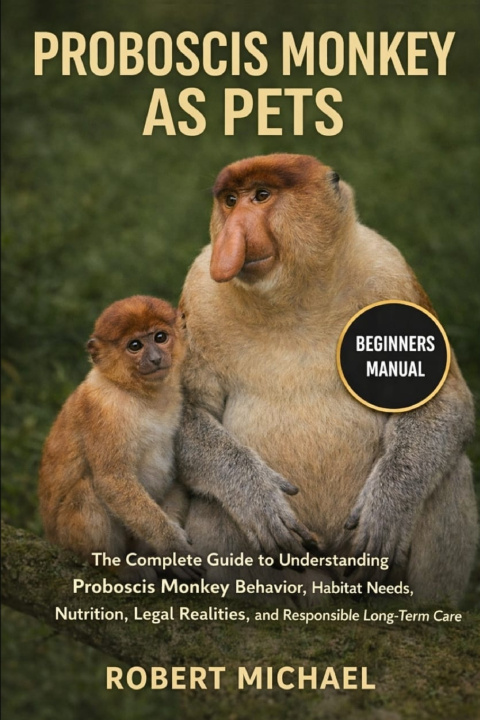
PROBOSCIS MONKEY AS PETS
The Complete Guide to Understanding Proboscis Monkey Behavior, Habitat Needs, Nutrition, Legal Realities, and Responsible Long-Term Care
 Angličtina
 37 b
37 b
 Nové
Nové
30 dní na vrátenie tovaru

INTRODUCTION
Origins and Discovery
The proboscis monkey, scientifically known as Nasalis larvatus, is one of the most distinctive primates on Earth. Native exclusively to the island of Borneo in Southeast Asia, this remarkable species has fascinated explorers, scientists, and wildlife observers for centuries. Its unusual appearance, complex social behavior, and highly specialized habitat have made it one of the most recognizable monkeys in the world.
The story of the proboscis monkey's scientific recognition begins during the era of European exploration in Southeast Asia. Early naturalists who traveled through Borneo's dense riverine forests encountered a primate unlike any other. The most striking feature they observed was the large, elongated nose of the adult male. This characteristic was so unusual that early observers often described the animal with a mix of scientific curiosity and amusement.
The species was formally described in the eighteenth century by naturalists studying the biodiversity of the Malay Archipelago. Over time, the proboscis monkey became a symbol of Borneo's rich and unusual wildlife. Indigenous communities had known of the animal for centuries before Western scientists documented it. Local names for the species reflect both familiarity and respect for the monkey's presence in the forests and along the rivers.
One of the most fascinating aspects of the proboscis monkey's origins is its evolutionary adaptation to a very specific environment. Unlike many primates that thrive in diverse forest ecosystems, the proboscis monkey evolved to live almost entirely within the wetlands, mangrove forests, and riverbanks of Borneo. This specialization shaped the animal's anatomy, diet, behavior, and social organization.
These monkeys developed traits that allow them to thrive in areas that many other primates avoid. Their strong swimming ability, specialized digestive system, and complex social communication are all products of a long evolutionary relationship with their environment. Understanding these origins helps explain why the proboscis monkey remains one of the most unique primates in the world today.
Unique Physical Features
Few animals possess a physical appearance as instantly recognizable as that of the proboscis monkey. The adult male's large nose, which hangs prominently over the mouth, has become the defining symbol of the species. This unusual feature has sparked curiosity among researchers for decades.
Scientists believe the nose plays an important role in communication and mate attraction. The larger the nose, the more resonant the male's vocal calls become. These deep, echoing sounds travel through dense forest environments and may help males establish dominance within their social groups. In addition to vocal amplification, the size of the nose appears to signal health and maturity to females.
Females and young monkeys possess smaller noses that are more upturned and less pronounced. This difference between males and females is an example of sexual dimorphism, a common trait in many primate species where the two sexes differ significantly in appearance.
The body of the proboscis monkey is also uniquely adapted to its lifestyle. Adults have long limbs that allow them to move efficiently through the forest canopy. Their tails are lengthy and help maintain balance as they travel across branches high above the ground.
Another striking feature is the monkey's large, rounded belly. At first glance, the belly may give the impression that the animal is overweight, but this is actually the result of a highly specialized digestive system. Proboscis monkeys consume large quantities of leaves, which require fermentation in the stomach to break down tough plant fibers. This fermentation process is similar to the digestive systems found in grazing animals like cows.


Informácie o knihe
Angličtina

Darujte túto knihu ešte dnes
Je to jednoduché
1 Pridajte knihu do košíka a vyberte možnosť doručiť ako darček 2 Obratom Vám zašleme poukaz 3 Knihu zašleme na adresu obdarovanéhoAhoj! Som Libroamiko, tvoj knižný radca.
Ako ti môžem pomôcť?