
 Kontakt
 Ako nakupovať
Doručenie
Nákupný poradca
 Angličtina
 44 b
44 b
30 dní na vrátenie tovaru

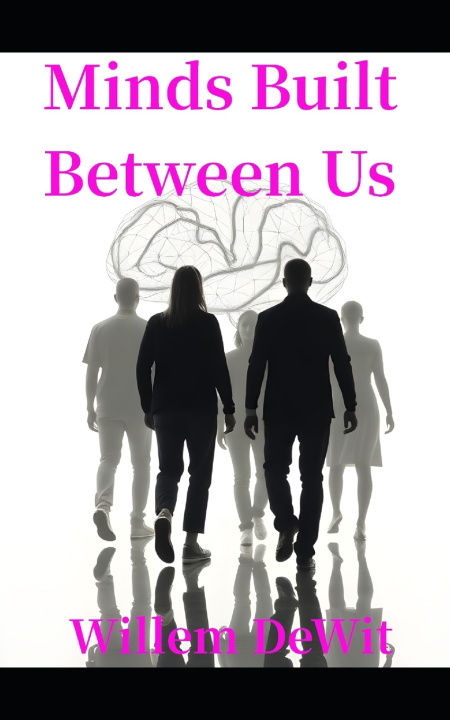
Minds Built Between Us
How Prediction, Feedback, and Culture Shape What We Become
This book is not written for a general audience, and it does not try to widen itself to become one.
Minds Built Between Us is a systems-level account of the human mind that rejects three familiar comforts:
that minds live inside individuals,
that culture is optional or symbolic,
and that identity is freely chosen.
The book starts from a hard biological claim:
Human minds are not located inside individual skulls.
They are built, stabilized, stressed, and reshaped between bodies, across time, through feedback loops that cost energy to maintain.
Everything that follows takes that constraint seriously.
This is not a self-help book.
It does not offer tools, exercises, healing language, or personal reassurance.
It does not argue from ideology, morality, or aspiration.
Mind is treated here as a predictive, biochemical system embedded in a body, trained through social coordination, and constrained by cultural feedback.
If a concept cannot be tied back to energetic cost, physiological regulation, and feedback dynamics, it is removed.
Part I - Prediction Has a Body
The opening sections establish the biological foundation:
why prediction is metabolically expensive,
how early development sets parameters without fixing outcomes,
why stress and hormonal regulation matter more than belief,
how prediction error is felt in the body long before it becomes thought.
Vague talk of "the mind" is replaced with a physically accountable system.
Part II - Minds Are Trained Between Bodies
The focus then shifts outward:
how infants tune prediction systems through caregivers,
why synchrony, rhythm, and emotional mirroring matter,
how groups create shared fields of familiarity,
why exclusion, shame, and threat are such powerful regulators.
The central claim is simple and uncomfortable:
Social belonging is not a preference.
It is a regulatory requirement for stable prediction.
Isolation is not just lonely.
It is destabilizing at the level of physiology.
Part III - Culture as Distributed Cognition
Culture is not treated as symbolic overlay, but as:
a distributed memory system,
a constraint field that narrows possible action,
a training environment for prediction engines.
Language, norms, and institutions function as externalized neural scaffolding, allowing limited individual brains to scale into collective cognition.
Here the book breaks with both reductionism and humanist idealism.
Part IV - Identity, Constraint, and Emergence Debt
Identity is not framed as self-expression, but as:
a compressed solution to coordination problems,
a stabilizer that reduces prediction error,
a liability when environments change faster than identities can adapt.
The concept of emergence debt names the accumulated cost of maintaining outdated prediction structures under new conditions.
Much contemporary distress appears not as pathology, but as system lag.
Who this book is for
This book is written for readers who already distrust single-level explanations, who value mechanism over metaphor, and who prefer clarity to comfort.
If you are looking for affirmation, optimism, or easy conclusions, this book will resist you.
That resistance is deliberate.


Informácie o knihe
Angličtina
Kategórie

Darujte túto knihu ešte dnes
Je to jednoduché
1 Pridajte knihu do košíka a vyberte možnosť doručiť ako darček 2 Obratom Vám zašleme poukaz 3 Knihu zašleme na adresu obdarovanéhoAhoj! Som Libroamiko, tvoj knižný radca.
Ako ti môžem pomôcť?